Resources

This page brings together key documents, publications, and materials produced as part of the Naturo project. Here you'll find research reports, policy briefs, project publications, and other outputs available for download, offering insight into our findings, methods, and ongoing work. If you have questions about any of the resources below or would like more information about our work, feel free to get in touch.

The Power of Co-Creation for Inclusive NbS

Fact sheet

Co-creation can help cities develop Nature-based Solutions (NbS) that better reflect local needs, but participation alone does not make a process inclusive. Evidence from three European Micro Urban Living Labs shows that meaningful co-creation depends on trust, flexibility, continuity and support for people whose resources or capacities to participate may be limited.

Governance Dimensions for Inclusive Co-Creation of Nature-based Solutions

Fact sheet

Governance arrangements influence who can participate, how relationships are maintained, how decisions can adapt, and whether learning is carried forward.The study examined three European Micro Urban Living Labs involving residents in assisted housing, high school students, and children with disabilities and their families. The cases show that inclusive co-creation can be constrained when flexibility, participation and learning depend mainly on individual practitioners rather than being supported institutionally.

The Pentagon of Participation

Interactive tool

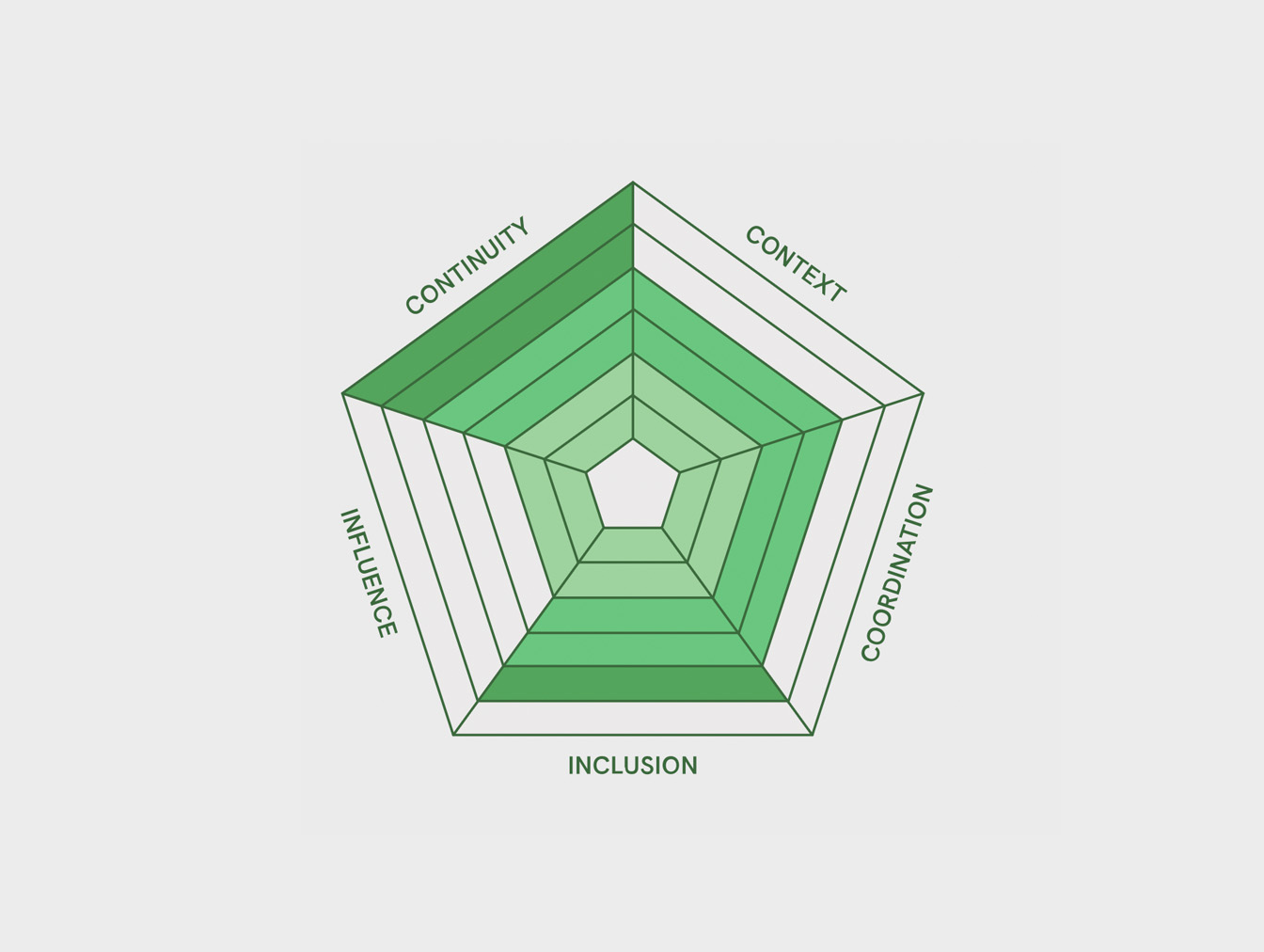
Participation in NbS planning and management often consists of one-off activities, with little continuity between project phases or links between different projects. This can make it harder to build relationships with residents and develop the trust needed for long-term participation in NbS. The Pentagon of Participation is an interactive tool that helps municipal officers reflect on five key aspects of participation in long-term NbS planning and management.

Beyond Project-Based Participation: Sustaining Participation in Nature-based Solutions through Relational Work

Academic paper in production

Participatory processes are widely promoted as a way to ensure that Nature-based Solutions (NbS) respond to local needs and knowledge. However, both research and practice tend to focus on participation within individual projects, with engagement often limited to one-off consultations. Less is known about how municipalities foster and sustain participation in NbS over time across projects.

Participatory processes are widely promoted as a way to ensure that Nature-based Solutions (NbS) respond to local needs and knowledge. However, both research and practice tend to focus on participation within individual projects, with engagement often limited to one-off consultations. Less is known about how municipalities foster and sustain participation in NbS over time across projects.
Drawing on interviews and workshops with municipal officers and other stakeholders in three European cities, this paper examines how organizational arrangements and everyday practices help municipalities sustain participation in NbS. Building on Strategic Management and Mosaic Governance approaches, and informed by relational perspectives on planning, the authors propose relational work as a way to understand how relationships are maintained and developed over time. Conceptually, the paper distinguishes between three arenas of relational work important for long-term participation in NbS: relationship-building within municipal organizations, between municipal officers and civic actors, and among civic actors themselves. The empirical analysis focuses primarily on the first two arenas of relationship-building, examining how relational arrangements, such as boundary-spanning roles, platforms and stewardship agreements, interact with everyday relational practices, such as informality and responsiveness.

The findings suggest that greater attention to the ongoing relational work underpinning participation, rather than to participatory events alone, can help researchers and practitioners better understand how municipalities sustain participation in NbS over time.

Authors:K. Venner 1, G. Mercado 2, H. Fors 2, T.B. Randrup 2, B. Goličnik Marušić 3, S. Praper Gulič 3, A. E. Buijs 1
1 Forest and Nature Conservation Policy Group, Wageningen University & Research, Wageningen, The Netherlands
2 Department of Landscape Architecture, Planning and Management, Swedish University of Agricultural Sciences (SLU), Alnarp, Sweden
3  Urban Planning Institute of the Republic of Slovenia (UIRS), Ljubljana, Slovenia